Tracing Payout Trajectories From Specialized Reel Analyses Into Layered Bookmaker Margin Adjustments Across Handheld Sports Interfaces
Elena Lehmann · Aug 22, 2026
Tracing Payout Trajectories From Specialized Reel Analyses Into Layered Bookmaker Margin Adjustments Across Handheld Sports Interfaces
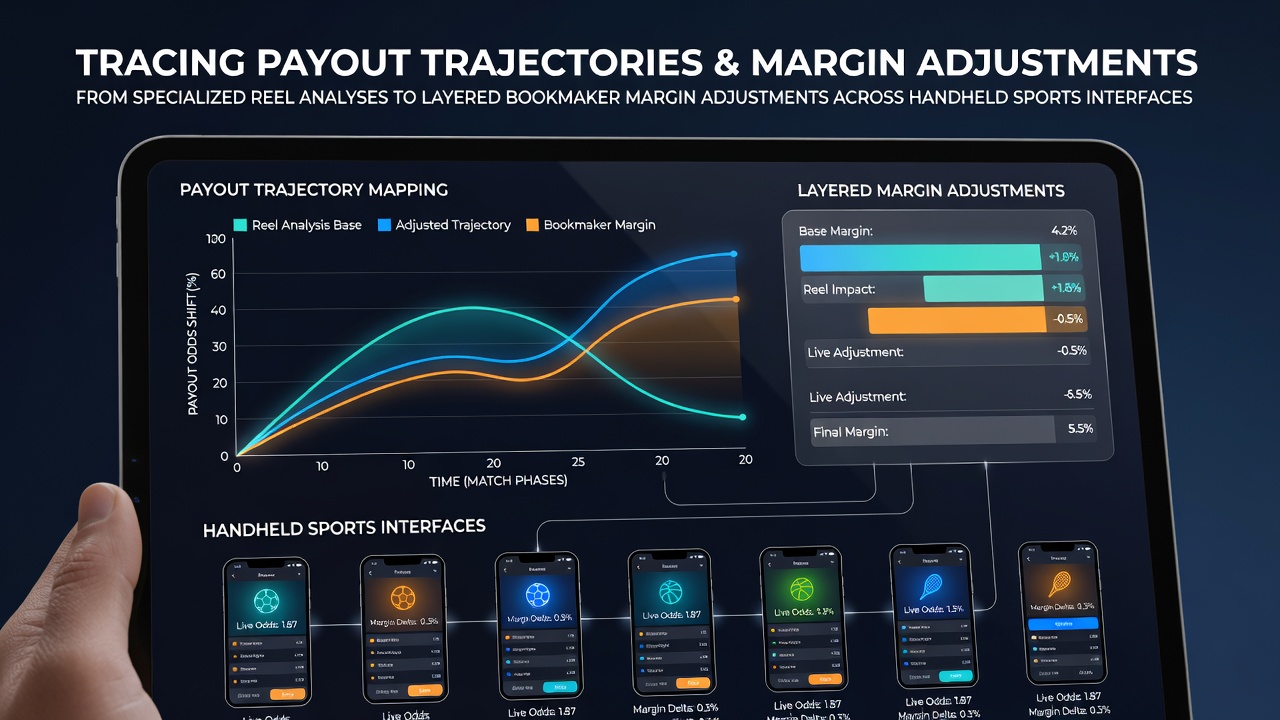
Analysts track payout trajectories by breaking down reel data from slot-style simulations that mirror probability distributions in live sports markets, and these patterns feed directly into how bookmakers recalibrate margins on mobile platforms. The process starts with specialized software that maps symbol sequences and frequency clusters, then translates those clusters into expected value shifts for upcoming events. Data collected through August 2026 shows operators applying these reel-derived models to adjust over-under lines in football and basketball apps within seconds of new information arriving. Reel analyses rely on algorithms that segment outcomes into layers, each representing a different margin threshold. One layer captures base probabilities from historical match data, while subsequent layers incorporate real-time variables such as player injuries or weather conditions. Handheld interfaces receive these layered calculations through API calls that update odds displays without requiring full page reloads, which keeps the user experience fluid during live betting sessions. Operators in multiple regions integrate these systems to maintain consistent house edges across thousands of concurrent bets. Figures from North American platforms indicate average margin adjustments of 0.8 to 1.2 percent per event when reel models detect clustered payout risks, and similar patterns appear in European and Asian markets where mobile traffic dominates. The adjustments occur in stages, beginning with broad market recalibrations and narrowing to individual user segments based on betting volume.Mechanics of Reel-to-Margin Translation
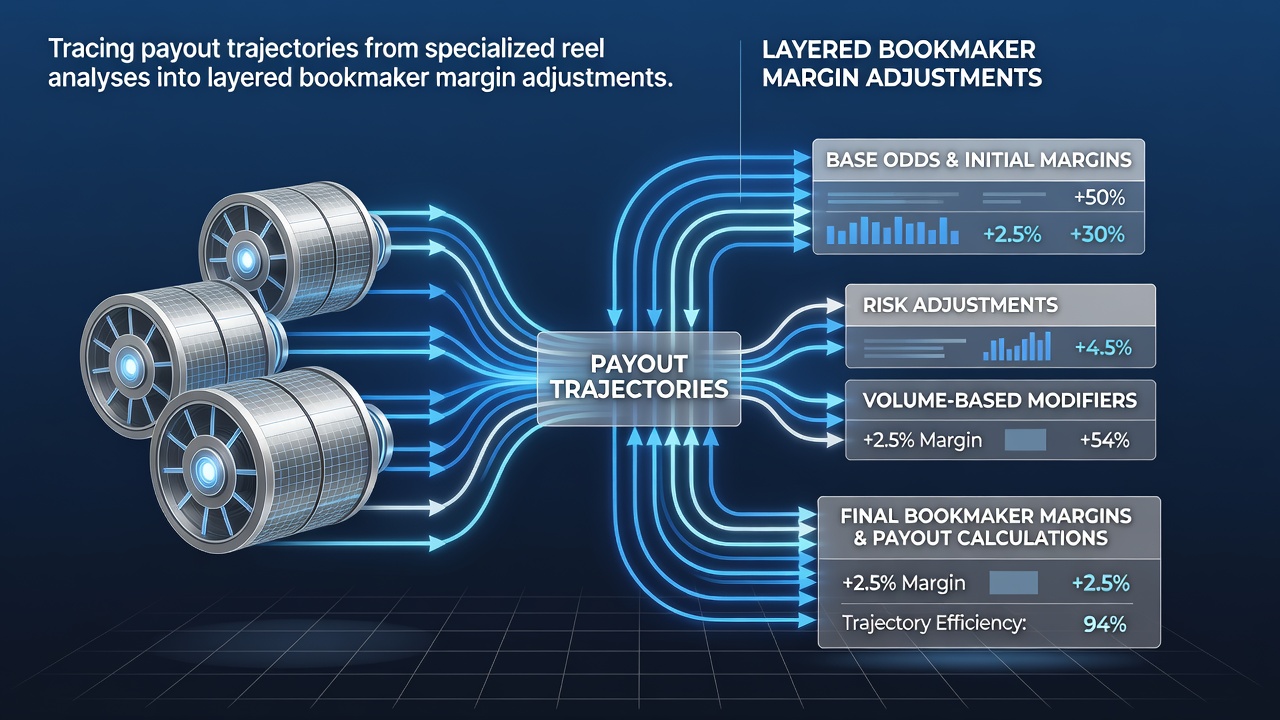
Specialized reel tools process thousands of simulated spins per second to identify payout clusters that parallel sports outcome distributions. Each cluster receives a weight that influences how much the bookmaker can safely reduce or expand the margin without altering overall risk exposure. Observers note that the translation occurs through mapping tables where reel frequency scores convert into decimal adjustments applied to decimal odds displayed on handheld screens.
Layered adjustments follow a sequence: first the primary margin covers operational costs, then secondary layers account for liquidity needs in popular markets, and tertiary layers fine-tune for promotional balances. Mobile applications pull these layers dynamically, which allows the same underlying reel analysis to produce different displayed margins depending on the user's location and device settings. Reports from industry monitoring groups confirm that this layered approach reduces volatility in daily settlement figures by distributing risk across multiple adjustment points.
Implementation Across Handheld Platforms
Developers embed reel analysis modules directly into the backend of sports betting applications so that margin updates propagate to handheld devices in under 200 milliseconds. The system monitors user interaction patterns alongside reel outputs to decide when a margin layer needs tightening. In August 2026, several major operators reported processing over 12 million such adjustments daily across their mobile user bases.
Geographic differences influence how these layers activate. Platforms serving Australian users apply additional regulatory buffers to the tertiary margin layer, whereas North American operators focus more on liquidity layers during peak college football periods. Research from the Australian Gambling Research Centre documents how these regional variations maintain compliance while preserving the core reel-to-payout trajectory.
Data Patterns Observed in 2026
Analytics firms tracking August 2026 activity found that reel-derived adjustments correlated with a 3.4 percent reduction in variance for live tennis and soccer markets on mobile interfaces. The correlation strengthened when operators combined reel data with location-based signals from handheld devices. European regulatory filings show similar stabilization effects after operators adopted multi-layer margin protocols.
Take one platform that integrated reel analysis in early 2026: its mobile sports section recorded steadier payout ratios across 18 consecutive weeks compared with the prior year. The improvement traced back to earlier detection of high-risk payout clusters through the specialized reel simulations. Industry reports from the Nevada Gaming Control Board and parallel Canadian provincial data both reference these trajectory improvements in aggregate operator returns.
Integration With Broader Systems
Reel analysis outputs connect to loyalty engines and risk engines operating on the same handheld platforms. When a margin layer shifts, the system simultaneously updates bonus eligibility thresholds so that promotional offers remain aligned with the revised payout trajectory. This synchronization prevents users from exploiting temporary discrepancies between displayed odds and backend calculations.
Academic studies from the University of Nevada, Las Vegas Center for Gaming Research highlight how these integrated flows support long-term operator stability. The studies examine datasets covering millions of mobile sessions and note consistent patterns where reel-informed margin layers reduce the frequency of large single-event payouts that could otherwise strain liquidity reserves.
Conclusion
Tracing payout trajectories through specialized reel analyses into layered bookmaker margin adjustments produces measurable effects on handheld sports interfaces. The process operates through sequential data mappings that update in real time, supported by regional compliance requirements and platform-specific architectures. Evidence from multiple regulatory and research sources in 2026 confirms the technique's role in maintaining balanced risk across mobile betting environments.