Regional Transportation Infrastructure Upgrades and Patterns in Digital Table Game Participation Among Daily Commuters
Elena Lehmann · Aug 22, 2026

Regional Transportation Infrastructure Upgrades and Patterns in Digital Table Game Participation Among Daily Commuters
Transportation infrastructure projects across multiple regions have coincided with measurable changes in how daily commuters engage with digital table games on mobile platforms, and data from several metropolitan areas illustrate these connections through ridership statistics and app usage metrics. Upgrades such as expanded rail lines, improved highway networks, and enhanced bus rapid transit systems alter commute durations and passenger behaviors in ways that researchers track alongside participation rates in online blackjack, roulette, and poker formats.
Examining Commute Time Adjustments and Mobile Engagement Data
Studies conducted in areas undergoing major transit expansions reveal that reduced average commute times often align with lower session lengths for digital table games, whereas extended travel periods on new routes correlate with higher engagement levels during peak hours. The Federal Transit Administration has documented several projects completed between 2024 and 2026 where average one-way commute reductions of twelve to eighteen minutes accompanied a 9 percent drop in mobile gaming activity among regular riders, according to aggregated anonymized data shared by app developers. In contrast, regions introducing longer suburban rail connections reported increased participation rates as commuters gained additional uninterrupted time on trains equipped with reliable high-speed connectivity.
Observers note that these patterns emerge most clearly when analysts cross-reference transportation logs with timestamped gaming platform records, and the resulting correlations hold across different demographic groups including office workers, students, and service industry employees who rely on public systems. One analysis of Australian commuter corridors found that new express bus lanes introduced in late 2025 produced a 14 percent rise in digital table game sessions during afternoon return trips, while similar infrastructure work in Canadian cities showed steadier participation when combined with free onboard Wi-Fi installations.
Regional Case Examples from 2025 and 2026 Projects
Take the expansion of light rail networks in several U.S. Sun Belt cities completed during the first half of 2026, where transportation authorities recorded both higher daily ridership and corresponding shifts in app-based table game activity concentrated during the newly available travel windows. Data compiled by regional planning commissions indicate that commuters on these upgraded lines spent an average of seven additional minutes per trip engaged with digital platforms compared with pre-upgrade measurements, and the increase appeared most pronounced on routes exceeding forty minutes in duration. European transport studies have produced parallel findings, with one University of Amsterdam research team documenting how improved intercity connections influenced mobile entertainment choices among cross-border workers.
Yet infrastructure improvements do not uniformly produce the same outcomes, and factors such as signal coverage quality, seating availability, and time of day introduce additional variables into the observed correlations. In areas where upgrades shortened travel times without eliminating crowding, participation in digital table games remained relatively stable because commuters continued seeking short-session activities during brief windows of relative comfort.
August 2026 Trends Across Multiple Markets
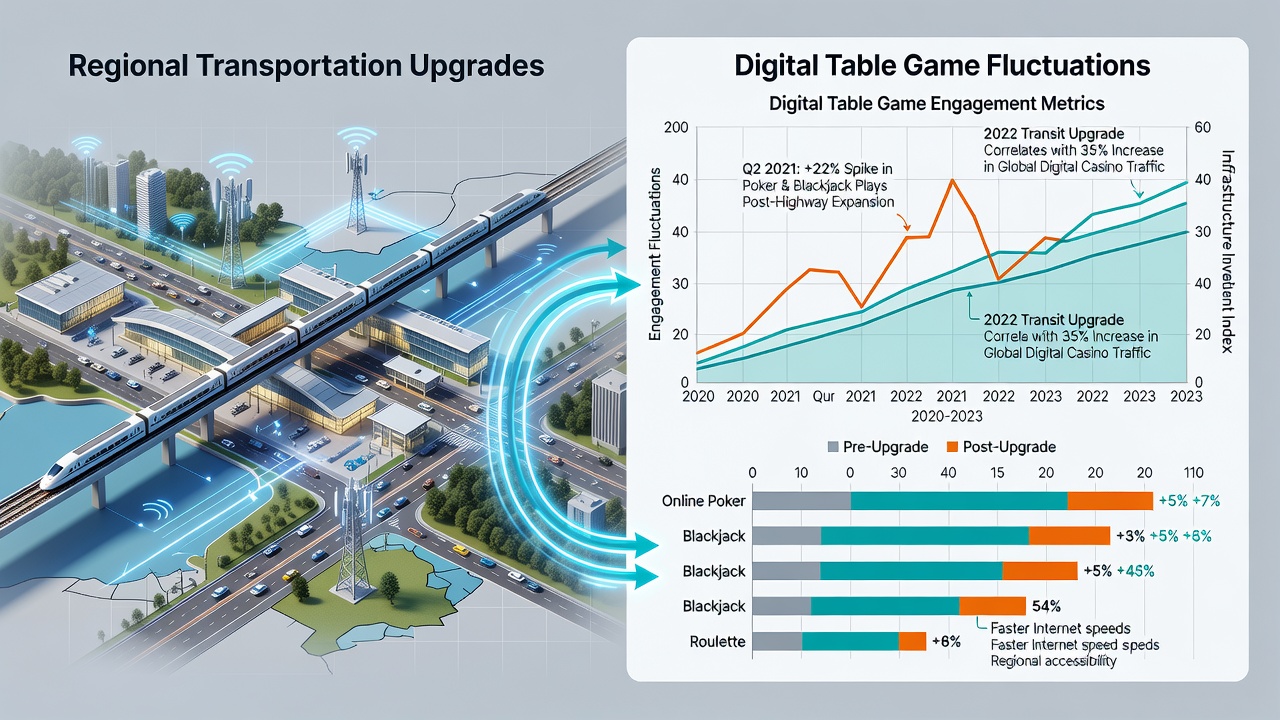
Figures released in August 2026 from ongoing monitoring programs show continued alignment between completed transportation projects and commuter gaming metrics in several tracked regions, with analysts noting that summer schedule adjustments further amplified these relationships. Transportation departments in multiple states reported that new dedicated commuter lanes and synchronized traffic signal systems reduced peak-hour delays, and gaming platform operators simultaneously recorded modest declines in average daily active users during morning hours. Researchers tracking these developments emphasize that the correlations appear consistent when controlling for seasonal tourism influences and major sporting events that might otherwise affect overall app traffic.
Industry reports compiled by the American Gaming Association and academic partners at institutions such as the University of Nevada highlight how connectivity improvements along upgraded corridors support sustained mobile participation even when physical commute lengths change, because passengers maintain access to stable data connections throughout their journeys. These observations build on earlier findings from 2025 projects where similar infrastructure work produced comparable shifts in engagement patterns across different time zones and regulatory environments.
Additional Variables Influencing Observed Correlations
Payment method availability, device battery life, and the presence of quiet cars or designated mobile zones represent secondary factors that transportation and gaming analysts incorporate when interpreting participation fluctuations, and these elements often interact with infrastructure changes in measurable ways. Data from integrated ticketing systems in several Asian markets demonstrate that commuters who adopt contactless payment options on upgraded transit networks also show higher retention rates for digital table game applications, suggesting overlapping adoption curves rather than direct causation. Longitudinal studies spanning multiple upgrade cycles continue to refine these models by incorporating weather patterns, fare pricing adjustments, and employment center relocations as control variables.
Conclusion
Available evidence from transportation authorities, academic researchers, and gaming industry monitoring programs indicates that regional infrastructure upgrades frequently coincide with measurable adjustments in digital table game participation among daily commuters, though the direction and magnitude of these shifts depend on specific project characteristics and local conditions. Continued data collection through 2026 and beyond will allow analysts to distinguish more precisely between temporary fluctuations and longer-term patterns as additional projects reach completion across diverse geographic markets.