How player migration patterns between virtual sports and live dealer tables reveal emerging trends in cross-platform loyalty ecosystems
Klara Griffin · Aug 12, 2026
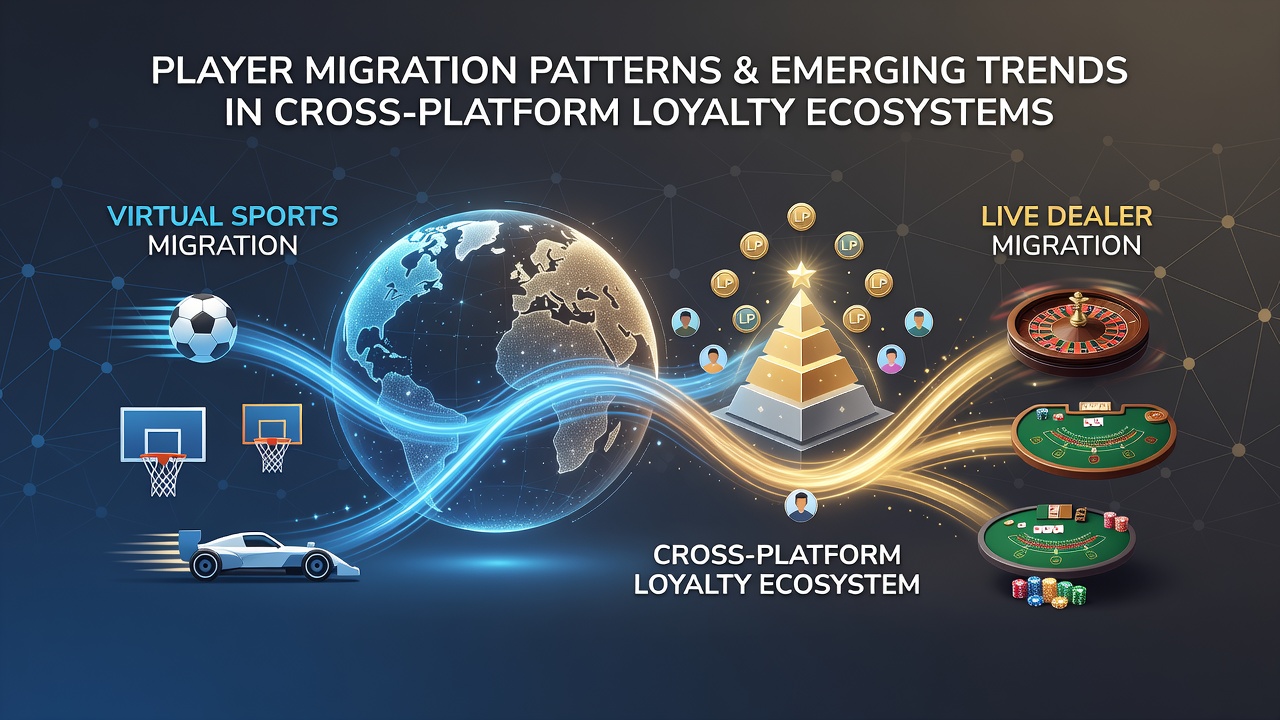
How player migration patterns between virtual sports and live dealer tables reveal emerging trends in cross-platform loyalty ecosystems
Player movement between virtual sports simulations and live dealer environments has accelerated throughout 2026 as integrated platforms track behavioral data across multiple game types, and August 2026 figures from several regional regulators show consistent shifts in session duration and reward redemption rates. Observers note that participants often begin sessions in virtual sports sections before transitioning to live dealer tables within the same application, which creates measurable patterns in how loyalty points accumulate and transfer between these categories.
Tracking Cross-Platform Movement Data
Research from multiple jurisdictions indicates that virtual sports attract shorter initial sessions while live dealer tables extend overall playtime once players migrate, and this sequence appears repeatedly in aggregated logs from operators in North America and parts of Europe. Data compiled through August 2026 reveals that users who complete virtual sports bets frequently carry forward accumulated points into live dealer sessions where redemption options expand, which strengthens retention metrics across the combined ecosystem. Analysts at the New Jersey Division of Gaming Enforcement have documented similar transitions in monthly reports that separate virtual sports activity from table game participation yet show overlapping account identifiers.
Those who study these ecosystems point out that algorithmic systems now detect when a player finishes a virtual sports round and immediately surface live dealer variants with matching themes, and the result is higher conversion between the two formats. Figures from the Malta Gaming Authority for the first half of 2026 further demonstrate that loyalty tiers advance faster when points originate in virtual sports and convert directly to live dealer rewards, reducing the friction that previously kept separate player segments apart.
Loyalty Mechanisms Driving the Shifts
Integrated applications synchronize bonus structures so that virtual sports achievements unlock multipliers usable at live dealer tables, and this design encourages sequential play rather than isolated sessions. Operators report that players who engage both formats within a single login window show elevated lifetime value compared with single-format users, according to internal metrics shared through industry associations such as the Canadian Gaming Association. The synchronization extends to tiered benefits where higher loyalty levels grant faster access to private live dealer rooms after virtual sports milestones are reached.

August 2026 updates from several state-level monitoring bodies in the United States highlight that cross-platform point pools have increased redemption rates for non-cash rewards by measurable margins, while traditional cash-out patterns remain stable. These systems rely on real-time matching that pairs a player's virtual sports preferences with suitable live dealer variants, and the outcome is reduced churn between different operator applications.
Regional Variations and Regulatory Context
Patterns differ by jurisdiction because regulatory frameworks shape how operators may combine virtual sports and live dealer features under one loyalty umbrella. In markets where single wallets are permitted, migration occurs more fluidly, whereas segmented accounts slow the transfer of points and reduce the visibility of emerging trends. Reports issued by the Australian Communications and Media Authority in mid-2026 note that operators offering unified loyalty ledgers record higher session bridging between virtual sports and live dealer products than those maintaining separate ledgers.
Academic examinations of player logs, including work published through research centers affiliated with the University of Nevada, Reno, confirm that sequential play correlates with extended account lifespan when loyalty rewards remain portable. The studies separate demographic cohorts yet find the same directional movement across age groups once platforms implement unified point systems.
Conclusion
August 2026 data continues to illustrate that migration between virtual sports and live dealer tables functions as a reliable indicator of loyalty ecosystem strength, with point portability and algorithmic prompts serving as primary facilitators. Regulatory bodies across multiple continents have begun incorporating these cross-format metrics into their oversight frameworks, and operators adjust program design accordingly to maintain engagement across both categories. The resulting patterns provide concrete benchmarks for how integrated platforms evolve player retention strategies over time.